Stepping into any kitchen, you’ll likely encounter one of two ubiquitous appliances – or perhaps even both. The microwave and the toaster oven have become staples, promising to simplify our culinary lives. Yet, despite their shared goal of heating food, these workhorses operate on fundamentally different principles, leading to distinct results and ideal uses. This guide delves into the core differences, helping you navigate their unique strengths and weaknesses to determine which appliance truly belongs on your countertop, perfectly aligned with your cooking style and needs.
Understanding the Basics: How They Work
Before deciding which appliance is best, it’s essential to grasp the science behind their cooking methods. Their differing approaches directly influence the types of food they excel at preparing and the textures they achieve.
Microwave Oven: The Speed Demon
|
Our Picks for the Best Microwave in 2026
As an Amazon Associate I earn from qualifying purchases.
|
||
| Num | Product | Action |
|---|---|---|
| 1 | TOSHIBA EM131A5C-BS Countertop Microwave Ovens 1.2 Cu Ft, 12.4" Removable Turntable Smart Humidity Sensor 12 Auto Menus Mute Function ECO Mode Easy Clean Interior Black Color 1000W |

|
| 2 | Chefman Countertop Microwave Oven 0.9 Cu. Ft., 900 Watts with 10 Power Levels, 6 Cooking Presets with One-Touch Express Cook, Eco Mode, Child Safety Lock, & Mute Button - Black |
|
| 3 | Chefman Countertop Microwave Oven 0.7 Cu. Ft., 700 Watts with 10 Power Levels, 6 Cooking Presets with One-Touch Express Cook, Eco Mode, Child Safety Lock, & Mute Button - Black |
|
| 4 | TOSHIBA EM131A5C-SS Countertop Microwave Ovens 1.2 Cu Ft with 12.4" Removable Turntable Smart Humidity Sensor, 12 Auto Menus Mute Function ECO Mode Easy Clean Interior, 1000W, Silver |
|
| 5 | COMFEE' EM720CPL-PMB Countertop Microwave Oven with Sound On/Off, ECO Mode and Easy One-Touch Buttons, 0.7cu.ft, 700W, Black |
|
| 6 | COMFEE' EM720CPL-PM Countertop Microwave Oven with Sound On/Off, ECO Mode and Easy One-Touch Buttons, 0.7 Cu Ft/700W, Pearl White |
|
| 7 | FRIGIDAIRE EMW736BLK 0.7 Cu. Ft. Microwave, Black |
|
| 8 | TOSHIBA ML-EM09PA(BS) Small Microwave Oven with 6 Auto Menus, Mute Function, LED Lighting Countertop Microwave Perfect for Kitchen, 0.9 Cu Ft, 10.6 Inch Removable Turntable, 900W Black Stainless Steel |
|
| 9 | FRIGIDAIRE EMW788RETRO 0.7 cu. ft. Retro Microwave, Black-Gold |
|
| 10 | BLACK+DECKER EM720CB7 Digital Microwave Oven with Turntable Push-Button Door, Child Safety Lock, 700W, Stainless Steel, 0.7 Cu.ft |
|
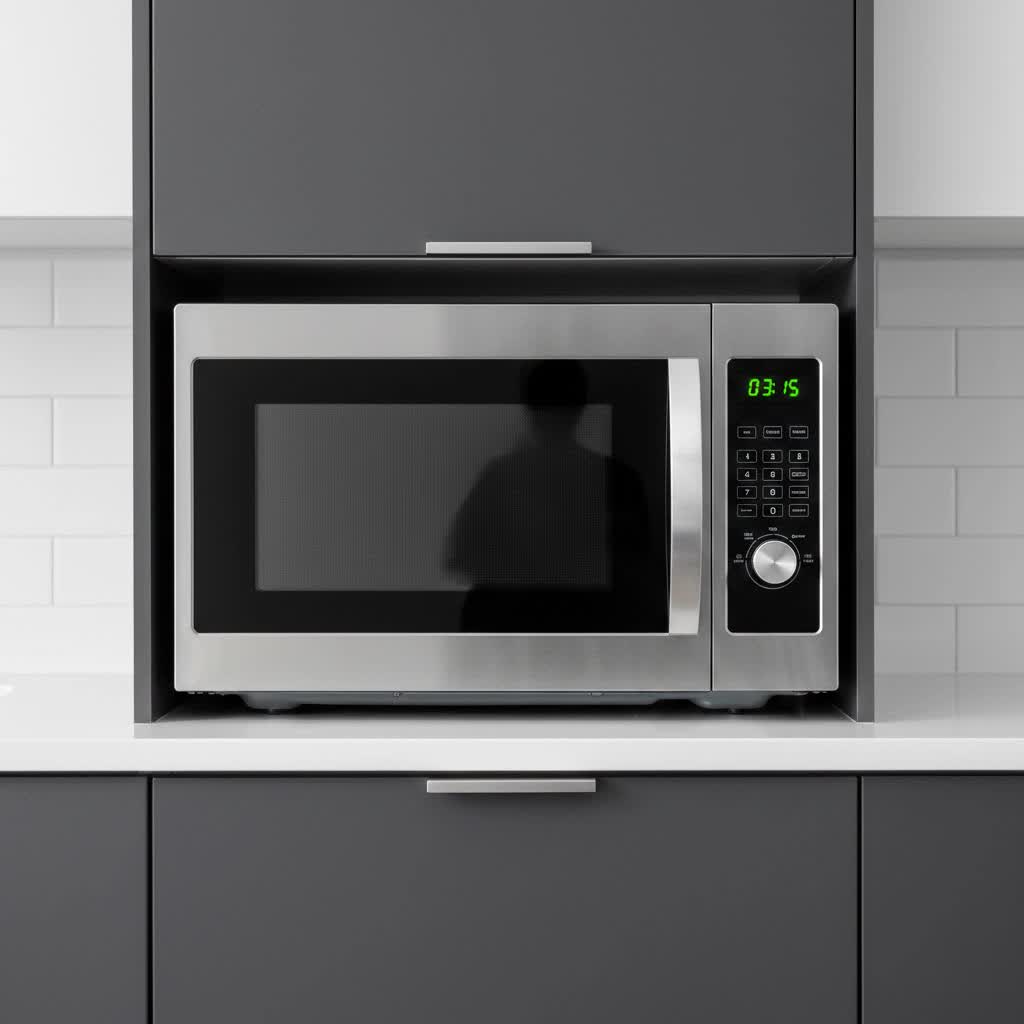
Microwaves are renowned for their incredible speed. This efficiency stems from their unique heating mechanism: they generate electromagnetic waves that penetrate food and excite the water and fat molecules within it. These rapidly vibrating molecules create friction, which in turn generates heat, cooking the food quickly from the inside out. This method means no preheating is required, making it perfect for rapid tasks.
Toaster Oven: The Mini Conventional Oven
In contrast, a toaster oven functions much like a miniature version of your full-sized conventional oven. It uses electric heating coils, typically located at the top and bottom of the cooking chamber, which radiate direct heat onto the food’s surface. This dry heat cooks food from the outside in, allowing for browning, crisping, and caramelization – textures a microwave simply cannot replicate.
Key Differences: A Side-by-Side Comparison
While both appliances heat food, their operational methods lead to significant divergences in performance, versatility, and suitability for various dishes. Understanding these distinctions is crucial for making an informed choice.
Cooking Speed & Convenience
When time is of the essence, the microwave reigns supreme. It requires no warm-up period, delivering piping hot food or defrosted ingredients in mere seconds to minutes. This instant readiness makes it an indispensable tool for busy mornings or quick meal turnarounds.
Toaster ovens, on the other hand, need a few minutes to preheat, similar to a traditional oven, though typically faster than a full-sized unit. While this adds a short delay, the resulting cooking quality often justifies the wait, especially when a crispy finish is desired.
Cooking Quality & Versatility
The cooking quality offered by a toaster oven often surpasses that of a microwave, particularly for foods where texture is paramount. The dry, radiant heat of a toaster oven creates delicious browning, satisfying crispness, and perfectly melted cheese, making it ideal for pastries, pizzas, and reheated fried foods. Many modern toaster ovens also boast advanced functions like convection, air frying, and even dehydrating, greatly expanding their culinary repertoire.
Microwaves excel at heating foods with high water content, such as soups, beverages, and steamed vegetables, without altering their internal moisture. However, this same attribute can be a drawback for other foods, often leaving items like bread soggy or pizza crust soft, lacking the desirable crisp texture. While some advanced microwaves offer convection or grilling modes, a standard microwave’s primary strength lies in its speed for simple heating tasks.
“When choosing a kitchen appliance, consider not just how quickly it heats, but how it transforms the food. A microwave saves time, but a toaster oven can elevate a simple meal with texture and flavor.”
Energy Efficiency
For quick heating tasks, microwaves are generally more energy-efficient. Their ability to heat food rapidly means they operate for shorter durations, consuming less electricity overall. This makes them a cost-effective choice for small, routine tasks like reheating a cup of coffee or a plate of leftovers.
Toaster ovens, while using more energy than a microwave for similar reheating tasks due to preheating and longer cook times, are considerably more energy-efficient than a full-sized conventional oven for preparing small meals. Opting for a toaster oven with a convection setting can further reduce cooking times and energy consumption by circulating hot air more efficiently.
Size & Capacity
The physical footprint and internal volume of these appliances can vary significantly. Standard toaster ovens typically offer a smaller capacity, ranging from approximately 0.3 to 1.0 cubic feet, and are often measured by how many slices of bread they can toast (2 to 8 slices). They are primarily designed as countertop units, ideal for compact kitchens or individuals.
Microwaves generally come in larger capacities, typically spanning 1.1 to 2.2 cubic feet, and offer more versatile installation options, including countertop, built-in, or over-the-range models. This wider range of sizes and installation types makes microwaves adaptable to various kitchen layouts and larger household needs.
Feature Set
Basic microwave models usually offer variable power levels and common pre-programmed settings for items like popcorn or potatoes. More advanced microwaves might include sensor cooking, which automatically adjusts cooking times, as well as specialized modes such as convection, grilling, or even air frying, merging functionalities.
Toaster ovens, even basic models, commonly feature toast, bake, broil, reheat, and defrost functions, allowing for a broader range of cooking techniques. High-end countertop ovens expand on this with convection technology, air frying, dehydrating, and precise temperature controls, offering significant versatility for culinary enthusiasts.
Types of Food Best Suited For
Microwaves excel at preparing or reheating foods that benefit from rapid, even heating without surface crisping. This includes:
- Beverages like coffee or tea
- Soups and stews
- Steamed vegetables
- Melting butter or chocolate
- Defrosting frozen items
- Cooking high-water-content dishes like oatmeal
Toaster ovens are the preferred choice when you want to achieve a crisp, browned, or toasted finish. They are perfect for:
- Toasting bread, bagels, or waffles
- Reheating pizza, fries, or other crispy leftovers
- Baking cookies, small cakes, or casseroles
- Broiling fish or chicken
- Roasting vegetables or small cuts of meat
- Making grilled cheese sandwiches
Maintenance & Cleaning
Maintaining a microwave is generally a straightforward task. Many models feature steam-clean functions that loosen food splatters, allowing for a quick wipe-down of the smooth, unexposed interior surfaces. The removable glass turntable is typically dishwasher-safe, simplifying the cleaning process.
Toaster ovens, due to their radiant heating elements and multiple components, often require more thorough cleaning. They typically include removable wire racks and a crumb tray, which need regular emptying and washing. Exposed heating coils and the nooks and crannies of the interior can also accumulate grease and food residue, demanding more effort to keep sparkling clean.
Comparison Table: Microwave vs. Toaster Oven
| Feature | Microwave Oven | Toaster Oven |
|---|---|---|
| Heating Method | Electromagnetic waves (inside out) | Electric coils (radiant heat, outside in) |
| Cooking Speed | Very fast (no preheating) | Slower (requires preheating) |
| Cooking Quality | Best for high-water content, can be soggy | Crisping, browning, baking, roasting, toasting |
| Energy Usage | Efficient for quick tasks | More efficient than full oven for small batches |
| Capacity | 1.1-2.2 cu ft | 0.3-1.0 cu ft (2-8 slices) |
| Primary Function | Reheating, defrosting, quick cooking | Toasting, baking, broiling, crisping, roasting |
| Best For | Soups, beverages, steamed veggies, leftovers | Pizza, toast, baked goods, roasted meats/veggies |
| Cleaning | Generally easier (smooth interior) | More involved (racks, crumb tray, exposed elements) |
Which One Do You Need? Making the Right Choice
The ultimate decision between a microwave and a toaster oven hinges entirely on your individual cooking habits, lifestyle, and available kitchen space. There’s no single “better” appliance, only the one that best fits your needs.
Choose a Microwave if…
- Speed is your top priority. You need to reheat meals, defrost ingredients, or cook quick snacks in minutes.
- You primarily deal with liquids or high-water-content foods. Soups, beverages, and steamed vegetables are its forte.
- You’re short on countertop space but need versatile installation. Built-in or over-the-range options save valuable counter real estate.
- Ease of cleaning is a major factor. Its smooth interior makes wipe-downs a breeze.
Choose a Toaster Oven if…
- You crave crispy, browned, or toasted textures. Reheating pizza, crisping up leftovers, or making perfect toast are essential.
- You want to bake or roast small portions. It’s a more energy-efficient alternative to a full-sized oven for smaller dishes.
- Flavor and food quality are paramount. The dry heat enhances the taste and texture of many foods.
- You want additional cooking functions. Many models offer convection, air frying, and other advanced modes.
Consider a Combo Unit if…
For those who desire the best of both worlds without sacrificing precious counter space, a microwave-convection or microwave-air fry combo unit can be an excellent investment. These appliances offer the speed of a microwave alongside the browning and crisping capabilities of an oven, providing maximum versatility in a single footprint.
Why Not Both?
Many households find that having both a microwave and a toaster oven provides the ultimate culinary flexibility. The microwave handles the rapid reheating and defrosting, while the toaster oven takes care of tasks requiring browning and crisping. This combination ensures you’re always equipped with the right tool for any heating or cooking job.
Conclusion
Both microwaves and toaster ovens are invaluable kitchen appliances, each bringing unique strengths to the table. The microwave stands out for its unmatched speed and efficiency in heating liquids and high-water-content foods, making it perfect for hurried moments. Conversely, the toaster oven excels at delivering superior food quality with crisp textures, browning, and versatile cooking methods like baking and roasting, albeit at a slower pace.
Ultimately, your choice depends on your daily cooking routine, the types of meals you typically prepare, and how much you prioritize speed versus culinary results. Do you value lightning-fast reheating above all else, or does the satisfaction of a perfectly crisped crust win every time?
Frequently Asked Questions
Can a toaster oven replace a microwave entirely?
While a toaster oven can perform some microwave tasks like reheating food, it cannot replace a microwave entirely. It heats much slower and cannot effectively heat liquids or defrost as quickly, nor does it generate electromagnetic waves for internal heating.
Is a microwave or toaster oven more energy efficient?
For short heating tasks like reheating a single plate of food or boiling water, a microwave is generally more energy-efficient due to its rapid cooking time. However, for baking or roasting small meals, a toaster oven uses significantly less energy than a full-sized conventional oven.
Which appliance is better for reheating leftovers?
It depends on the leftover. For liquid-based leftovers like soup or stew, a microwave is faster and more effective. For solid leftovers that benefit from a crisp texture, such as pizza, fried chicken, or pastries, a toaster oven will yield superior, much crispier results.
Can you toast bread in a microwave?
No, a microwave cannot toast bread. Toasting requires dry, radiant heat to brown and crisp the bread’s surface, a function that microwaves, which heat food by exciting water molecules, are not designed to perform. Using a microwave on bread will typically just make it warm and soft.