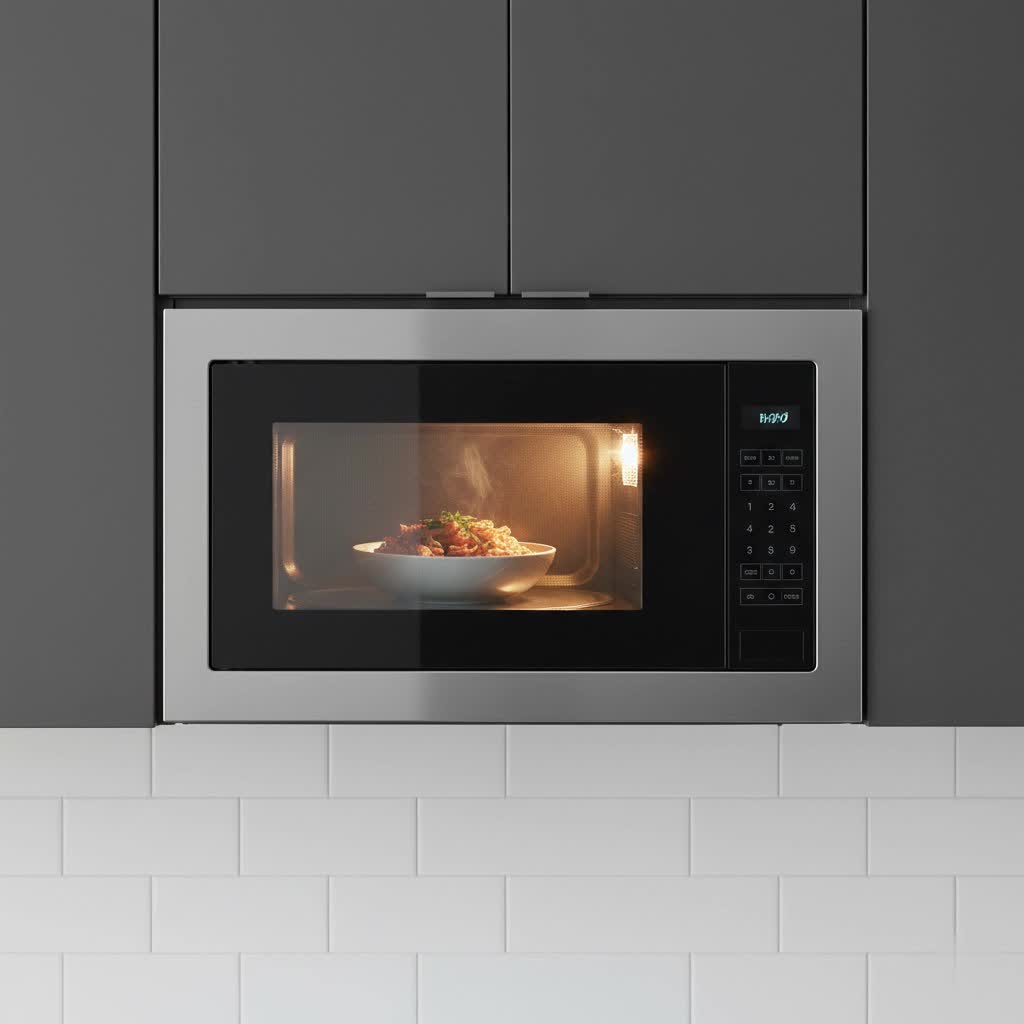
Considering an upgrade to your kitchen that offers both functionality and a sleek, modern aesthetic? An over-the-range microwave could be the perfect solution, freeing up valuable counter space and adding convenience to your cooking routine. While the idea of installing a new appliance might seem daunting, with the right tools, a clear plan, and a little patience, you can successfully tackle this DIY project. This comprehensive guide will walk you through every step, ensuring a safe and efficient installation, just as a trusted technician would advise.
Why Choose an Over-the-Range Microwave?
|
Our Picks for the Best Microwave in 2026
As an Amazon Associate I earn from qualifying purchases.
|
||
| Num | Product | Action |
|---|---|---|
| 1 | TOSHIBA EM131A5C-SS Countertop Microwave Ovens 1.2 Cu Ft with 12.4" Removable Turntable Smart Humidity Sensor, 12 Auto Menus Mute Function ECO Mode Easy Clean Interior, 1000W, Silver |

|
| 2 | Chefman Countertop Microwave Oven 0.9 Cu. Ft., 900 Watts with 10 Power Levels, 6 Cooking Presets with One-Touch Express Cook, Eco Mode, Child Safety Lock, & Mute Button - Black |
|
| 3 | FRIGIDAIRE EMW736BLK 0.7 Cu. Ft. Microwave, Black |
|
| 4 | COMFEE' EM720CPL-PM Countertop Microwave Oven with Sound On/Off, ECO Mode and Easy One-Touch Buttons, 0.7 Cu Ft/700W, Pearl White |
|
| 5 | BLACK+DECKER EM720CB7 Digital Microwave Oven with Turntable Push-Button Door, Child Safety Lock, 700W, Stainless Steel, 0.7 Cu.ft |
|
| 6 | TOSHIBA ML-EM09PA(BS) Small Microwave Oven with 6 Auto Menus, Mute Function, LED Lighting Countertop Microwave Perfect for Kitchen, 0.9 Cu Ft, 10.6 Inch Removable Turntable, 900W Black Stainless Steel |
|
| 7 | TOSHIBA EM131A5C-BS Countertop Microwave Ovens 1.2 Cu Ft, 12.4" Removable Turntable Smart Humidity Sensor 12 Auto Menus Mute Function ECO Mode Easy Clean Interior Black Color 1000W |
|
| 8 | FRIGIDAIRE EMW788RETRO 0.7 cu. ft. Retro Microwave, Black-Gold |
|
| 9 | Chefman Countertop Microwave Oven 0.7 Cu. Ft., 700 Watts with 10 Power Levels, 6 Cooking Presets with One-Touch Express Cook, Eco Mode, Child Safety Lock, & Mute Button - Black |
|
| 10 | COMFEE' EM720CPL-PMB Countertop Microwave Oven with Sound On/Off, ECO Mode and Easy One-Touch Buttons, 0.7cu.ft, 700W, Black |
|
Over-the-range (OTR) microwaves are a popular choice for many homeowners looking to maximize kitchen space. By integrating the microwave above your cooking range, you eliminate the need for a countertop model, instantly decluttering your kitchen. Beyond space-saving, many OTR microwaves also double as a range hood, offering built-in ventilation to remove smoke, steam, and cooking odors, thus enhancing air quality in your home. They come in various styles and features, from basic reheating functions to convection cooking and sensor heating, making them a versatile addition to any kitchen.
Before You Begin: Essential Preparations and Safety First
Before diving into the installation, thorough preparation is crucial for a smooth and safe process.
Gathering Tools and Supplies:
You’ll need more than just the microwave itself. Here’s a checklist of common tools and supplies:
- Your new over-the-range microwave
- Cardboard mounting templates (usually included with the microwave; sometimes the mounting bracket itself serves as a template)
- Measuring tape
- Pencil
- Level
- Scissors (for cutting templates)
- Stud finder
- Drill and drill bits (appropriate sizes for pilot holes and mounting bolts)
- Masking tape
- Drop cloth or towel (to protect your range and flooring)
- Lag screws or toggle bolts (often included with the microwave, but ensure they are suitable for your wall type and studs)
Safety Precautions:
Your safety is paramount. Always remember:
- Unplug your range from its electrical outlet and carefully move it out of the way. This prevents accidental activation and provides clear working space.
- This is a two-person job. Over-the-range microwaves are heavy and awkward to lift. Having a helper is essential for safety and ease of installation.
- Consult your owner’s manual. While this guide provides general steps, your specific microwave model will have unique instructions and requirements. Always refer to the manufacturer’s installation guide for precise measurements and hardware.
Clearance Requirements:
Proper clearance is vital for both safety and functionality. Generally, you’ll need about 12 to 13 inches of clearance above your range and approximately 66 inches from the floor to the top of the appliance. If your microwave is installed next to a wall on the left side, ensure there’s a minimum of 6 inches of clearance for the door to open fully. Standard microwave heights typically range from 12 to 15 inches, though low-profile models are shorter.
Ventilation Options:
Over-the-range microwaves offer different ventilation setups:
- Ducted (Exterior Venting): Air is drawn from the cooking surface, filtered, and then exhausted outside your home through ductwork. This is the most effective method for removing smoke and odors.
- Ductless (Recirculating): Air is drawn, filtered through a charcoal filter to remove odors, and then recirculated back into the kitchen. This option is suitable if exterior ductwork isn’t feasible, but it’s less effective at removing moisture and heat.
Ensure your microwave’s ventilation system is configured correctly for your chosen method before installation.
Step-by-Step Installation Guide
Follow these steps carefully to install your new over-the-range microwave.
Step 1: Prepare Your Workspace
Begin by unplugging your existing range and moving it away from the wall. Lay a drop cloth or towel over your countertop and range area to protect them from scratches and debris. Remove any items from the upper cabinet where the microwave will be installed.
Step 2: Locate Wall Studs
Using a stud finder, locate the vertical studs in the wall where the mounting plate will be attached. These studs provide crucial structural support. Mark the center of each stud with a pencil and use a level to draw straight vertical lines extending downwards. Aim to secure the mounting plate to at least one, but preferably two, studs for maximum stability.
Step 3: Remove the Mounting Plate (if attached)
Your new microwave might have the metal mounting plate attached to its back. If so, carefully detach it and set the microwave aside in a safe, protected spot. This mounting plate will be secured to the wall first.
Step 4: Apply the Rear Wall Template
Most microwaves come with a cardboard rear wall template. Cut it out carefully with scissors. Use masking tape to position this template on the wall, ensuring it’s level and flush with the bottom edge of your upper cabinet. If no template is provided, you can use the mounting bracket itself.
Step 5: Mark Drill Holes for the Mounting Plate
With the rear wall template or mounting bracket securely in place, use your pencil to mark the drill holes. These are typically located near the bottom corners. Also, mark any holes that align with the wall studs you located in Step 2. Draw a horizontal line along the bottom edge of the template or bracket to serve as a guide.
Step 6: Align and Secure the Mounting Plate
Remove the cardboard template (if used). Align the metal mounting plate with the marked drill holes and the horizontal line. Using your drill, create pilot holes at each marked location. Then, secure the mounting plate to the wall using the appropriate lag screws (for studs) or toggle bolts (for drywall sections), following your manufacturer’s instructions. Ensure the plate is perfectly level and firmly attached.
Step 7: Prepare the Upper Cabinet Template
Next, retrieve the upper cabinet cardboard template. Align it with the bottom of the upper cabinet, ensuring it’s centered along the rear wall and the template arrows point towards the wall. If no template is included, consult your microwave’s manual for specific hole locations.
Step 8: Drill the Power Cord Hole
With the upper cabinet template in place, mark the indicated spot for the power cord hole. Use your drill and the appropriate drill bit to carefully create this hole through the bottom of the cabinet. This is where the microwave’s power cord will pass through to plug into an outlet inside the cabinet. Also, drill any other marked holes for the top mounting bolts.
Step 9: Install the Microwave
This step requires a helper. First, remove any internal components from the microwave, such as the rotating plate, and tape the door shut to prevent it from swinging open during lifting.
With your helper:
- Lift and position: Carefully lift the microwave into the allotted space. Tilt it slightly towards you.
- Feed the cord: Guide the power cord through the hole you drilled in the upper cabinet.
- Align and push: Rotate the microwave upward, aligning it with the mounting plate. Push it firmly against the wall, ensuring it hooks onto the bottom edge of the mounting plate.
- Secure from above: While your helper holds the microwave in place, insert the provided bolts through the holes in the upper cabinet and into the top of the microwave.
- Tighten: Securely tighten all bolts until the microwave is firmly attached and stable.
Step 10: Final Checks and Testing
Once secured, plug in your new over-the-range microwave. Replace the rotating plate and any other internal components. Test the microwave by heating a cup of water, checking that the fan operates correctly, and ensuring the light functions. Finally, clean up your workspace, and you’re ready to enjoy your newly installed appliance!
Common Over-the-Range Microwave Installation FAQs
Do you need a professional to install an over-the-range microwave?
While many homeowners successfully install OTR microwaves themselves, the decision depends on your comfort level with DIY projects and basic electrical/carpentry skills. It’s generally recommended as a two-person job due to the appliance’s weight and awkward size. If you’re unsure or encounter complex issues like needing to add new electrical connections or ductwork, consulting a professional is always a wise choice.
Does an over-the-range microwave need to vent outdoors?
No, an over-the-range microwave does not necessarily need to vent outdoors. Many models can be configured to recirculate filtered air back into the kitchen, often called a ductless installation. However, for optimal smoke and odor removal, external venting (ducted installation) is generally more effective.
Should an over-the-range microwave be flush with the cabinets?
It is completely normal for an over-the-range microwave to protrude a few inches from the edge of your upper cabinets. This design allows the microwave door to open fully without hitting adjacent cabinet fronts. Built-in microwaves, which are designed to sit flush, are a different type of appliance. If your cabinets have a shallower depth, the microwave might extend out further than average.
What is a low-profile over-the-range microwave?
A low-profile over-the-range microwave is a compact version, typically measuring around 10 to 10.5 inches in height, significantly shorter than standard OTR models. This design is perfect for kitchens with limited vertical space above the range, offering a solution for areas where only a traditional range hood might fit, without sacrificing cooking capacity or power.
Conclusion
Installing an over-the-range microwave is a rewarding DIY project that can significantly enhance your kitchen’s aesthetics and functionality. By following this detailed guide, you can confidently replace an old unit or install a new one, enjoying the benefits of increased counter space and improved ventilation. Remember to prioritize safety, always consult your specific owner’s manual, and don’t hesitate to seek professional help if the task feels beyond your skill set. Are you ready to transform your kitchen with this practical upgrade?