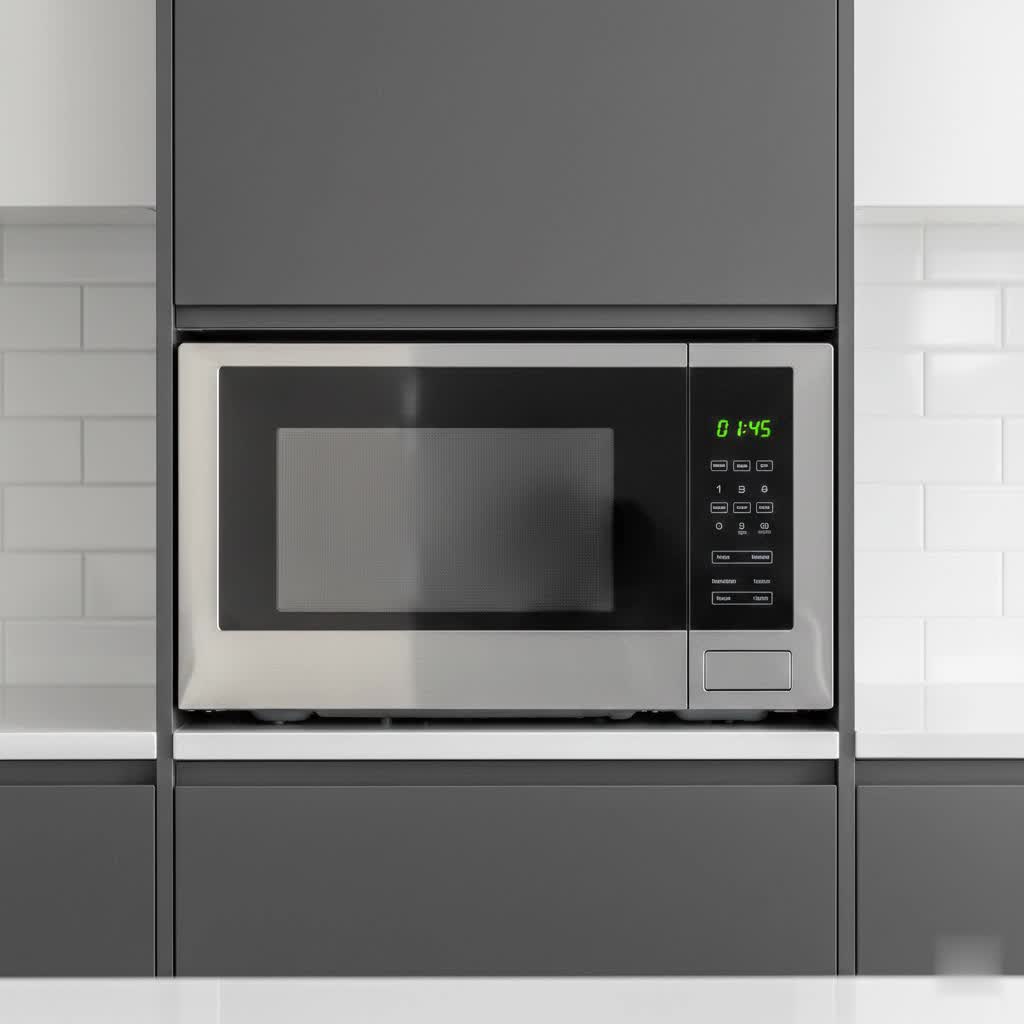
Stepping into a modern kitchen, you’ll quickly notice the seamless integration of appliances designed not just for function, but for optimizing space and enhancing efficiency. Among these, the over-the-range microwave stands out as a true multitasker. As an experienced technician, I’ve seen countless models, and I understand the considerations that go into choosing the perfect one for your home. This guide cuts through the clutter, offering insights to help you select an over-the-range microwave that meets your cooking needs and complements your kitchen’s aesthetic.
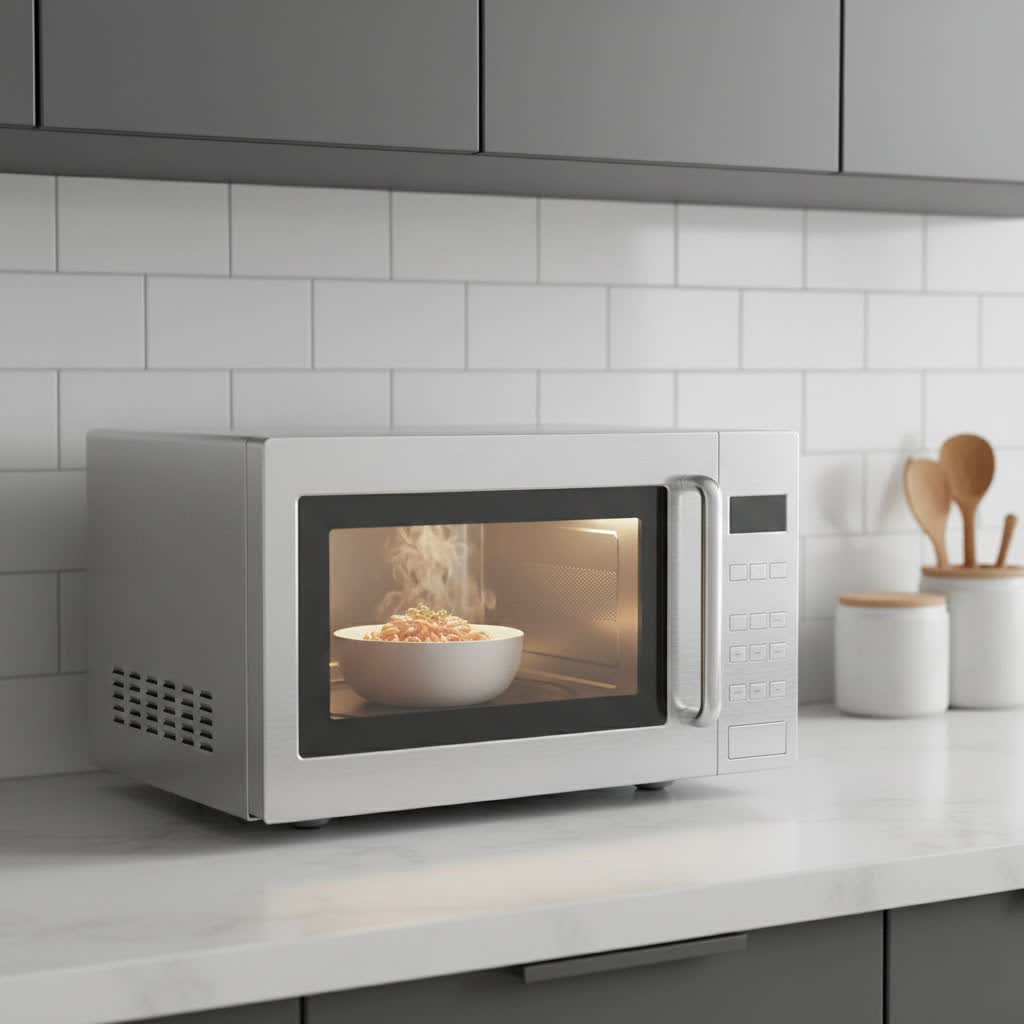
What is an Over-the-Range Microwave? Its Core Principles
An over-the-range (OTR) microwave is a kitchen appliance uniquely designed to be installed above your cooking range or stovetop. It ingeniously combines the primary function of a microwave oven—heating and cooking food with microwave energy—with the critical role of a range hood, providing ventilation for your cooktop. This dual functionality is achieved through magnetrons that generate microwaves to excite water molecules in food, along with a built-in fan system that extracts smoke, steam, and cooking odors.
The core benefit of an OTR microwave lies in its space-saving design, freeing up valuable countertop real estate, particularly in smaller kitchens. By integrating a ventilation system, it also actively contributes to a cleaner, more comfortable cooking environment by removing airborne particles and fumes. This makes it a smart choice for those looking to maximize both utility and aesthetics in their culinary space.
Popular Types of Over-the-Range Microwaves in the Market
Over-the-range microwaves come in various forms, each offering distinct advantages tailored to different cooking styles and kitchen designs. Understanding these types will help you narrow down your choices:
- Standard OTR Microwaves: These are the most common, primarily focusing on microwave cooking and basic ventilation. They are reliable for reheating, defrosting, and simple cooking tasks. Their controls are typically straightforward, offering preset options for common foods. They suit individuals or families seeking fundamental microwave functionality combined with an integrated vent.
- Convection OTR Microwaves: For those who desire more versatility, convection OTR microwaves offer the added benefit of convection cooking. This allows the microwave to function as a secondary oven, capable of baking, roasting, and even air frying, using a heating element and a fan to circulate hot air. They are ideal for households that want to expand their cooking options without adding another appliance.
- Smart OTR Microwaves: Integrating Wi-Fi connectivity and smart features, these models can be controlled remotely via smartphone apps or voice commands. They often include advanced sensor cooking technology that automatically adjusts cooking times and power levels based on humidity, ensuring perfectly cooked results. Smart microwaves appeal to tech-savvy users who appreciate convenience and integration with their smart home ecosystem.
- Flush Built-In OTR Microwaves: Designed for a sleeker, more integrated look, these microwaves are built to sit flush with cabinetry, offering a seamless aesthetic. While they often command a premium price, their design contributes significantly to a modern, uncluttered kitchen. They are perfect for homeowners prioritizing sophisticated design and a minimalist appeal.
Detailed Comparison Table for Over-the-Range Microwaves
To give you a clearer picture, here’s a comparative look at the types and models we’ve identified as top contenders, highlighting their key specifications and features.
| Feature | LG MVEF1337F (Overall) | Amana AMV2307PFS (Budget) | KitchenAid KMMF530PBS (Premium) | LG MVEL2033F (Large) | Samsung ME11A7710DG (Compact) |
|---|---|---|---|---|---|
| Capacity | 1.3 cu. ft. | 1.6 cu. ft. | 1.1 cu. ft. | 2.0 cu. ft. | 1.1 cu. ft. |
| Wattage | 1800W | 1000W | 1800W | 1050W | 1100W |
| Sensor Cook | Yes | Yes | No | Yes | Yes |
| Smart Features | Yes | No | Yes | Yes | Yes |
| Convection | No | No | Yes | No | No |
| Key Advantage | Smart sensing, quiet | Affordable, simple | Multi-function, sleek | Spacious interior | Slim design, SmartThings |
| Consideration | Prone to prints | Noisy fan, dim light | Expensive, noisy, installation | Bulky, prints, noisy | Small capacity, noisy fan |
This table provides a snapshot, but deeper dives into each model’s nuances are crucial for a truly informed decision.
Your Comprehensive Guide to Choosing the Right Over-the-Range Microwave
Selecting an over-the-range microwave involves balancing your practical needs with your kitchen’s design and your budget. Here’s a step-by-step approach to ensure you pick the perfect appliance.
Determine Your Usage Needs
Before diving into specifications, consider how you’ll primarily use your microwave. Are you mostly reheating leftovers, defrosting ingredients, or do you aspire to bake and roast with it?
- For basic reheating and defrosting: A standard OTR microwave with 800-1000 watts and essential presets will suffice, prioritizing reliability and ease of use.
- For extensive cooking, baking, or roasting: Look for models with convection capabilities, effectively turning your microwave into a versatile secondary oven.
- For smart home integration: If remote control, voice commands, and advanced sensor cooking appeal to you, prioritize smart-enabled models with Wi-Fi connectivity.
|
Our Picks for the Best Microwave in 2026
As an Amazon Associate I earn from qualifying purchases.
|
||
| Num | Product | Action |
|---|---|---|
| 1 | TOSHIBA EM131A5C-BS Countertop Microwave Ovens 1.2 Cu Ft, 12.4" Removable Turntable Smart Humidity Sensor 12 Auto Menus Mute Function ECO Mode Easy Clean Interior Black Color 1000W |

|
| 2 | Chefman Countertop Microwave Oven 0.9 Cu. Ft., 900 Watts with 10 Power Levels, 6 Cooking Presets with One-Touch Express Cook, Eco Mode, Child Safety Lock, & Mute Button - Black |
|
| 3 | TOSHIBA ML-EM09PA(BS) Small Microwave Oven with 6 Auto Menus, Mute Function, LED Lighting Countertop Microwave Perfect for Kitchen, 0.9 Cu Ft, 10.6 Inch Removable Turntable, 900W Black Stainless Steel |
|
| 4 | FRIGIDAIRE EMW788RETRO 0.7 cu. ft. Retro Microwave, Black-Gold |
|
| 5 | BLACK+DECKER EM720CB7 Digital Microwave Oven with Turntable Push-Button Door, Child Safety Lock, 700W, Stainless Steel, 0.7 Cu.ft |
|
| 6 | FRIGIDAIRE EMW736BLK 0.7 Cu. Ft. Microwave, Black |
|
| 7 | COMFEE' EM720CPL-PMB Countertop Microwave Oven with Sound On/Off, ECO Mode and Easy One-Touch Buttons, 0.7cu.ft, 700W, Black |
|
| 8 | Chefman Countertop Microwave Oven 0.7 Cu. Ft., 700 Watts with 10 Power Levels, 6 Cooking Presets with One-Touch Express Cook, Eco Mode, Child Safety Lock, & Mute Button - Black |
|
| 9 | TOSHIBA EM131A5C-SS Countertop Microwave Ovens 1.2 Cu Ft with 12.4" Removable Turntable Smart Humidity Sensor, 12 Auto Menus Mute Function ECO Mode Easy Clean Interior, 1000W, Silver |
|
| 10 | COMFEE' EM720CPL-PM Countertop Microwave Oven with Sound On/Off, ECO Mode and Easy One-Touch Buttons, 0.7 Cu Ft/700W, Pearl White |
|
Match Your Kitchen Space
Over-the-range microwaves are inherently space-saving by mounting above your stove, but proper measurements are crucial to ensure a correct fit. You’ll typically need about 30 inches of clearance above your cooktop. It’s essential to measure the width and depth of the available space to avoid obstructing cabinets or compromising safe operation. Some models offer a “low-profile” design for tighter spaces, while larger models may require more vertical clearance.
Select the Appropriate Capacity
The internal capacity, measured in cubic feet, dictates how much food your microwave can accommodate.
- Small capacity (under 1.5 liters): Ideal for individuals or small families, perfect for small plates, drinks, or single-serving meals. The Samsung ME11A7710DG with 1.1 cu. ft. is an excellent compact option.
- Medium capacity (1.5 – 2.0 liters): Suitable for average-sized families, comfortably fitting standard dinner plates and some casserole dishes. The Amana AMV2307PFS at 1.6 cu. ft. fits this category well.
- Large capacity (over 2.0 liters): Best for large families or those who frequently cook for gatherings, accommodating larger platters and cookware. The LG MVEL2033F offers a generous 2.0 cu. ft. capacity for bigger meals.
Consider the Power Output
Microwave power is measured in wattage, which directly affects cooking speed and efficiency.
- Lower wattage (under 800W): Tends to be less expensive and more energy-efficient but takes longer to cook or heat food thoroughly.
- Mid-range wattage (800W – 1000W): Offers a good balance of cooking speed and energy consumption for most everyday tasks.
- Higher wattage (over 1000W): Provides faster cooking and heating, often found in more advanced models with additional features like convection. The LG MVEF1337F and KitchenAid KMMF530PBS boast 1800W, offering powerful performance.
Essential Features to Look For
Modern OTR microwaves come with a host of features designed to simplify cooking:
- Sensor Cooking: This intelligent feature automatically detects humidity and steam levels in food to adjust cooking time, preventing overcooking or undercooking. The LG MVEF1337F is praised for its precise sensor cooking.
- Auto Defrost: Simplifies thawing frozen foods by automatically setting the optimal time and power level based on food type and weight.
- Pre-programmed Settings: One-touch buttons for popular items like popcorn, beverages, or potatoes make meal prep effortless.
- Inverter Technology: Provides a consistent, even distribution of microwave energy for more uniform cooking results, avoiding hot spots and cold centers.
- Child Lock: A safety feature that prevents accidental operation, especially useful in households with young children.
Evaluate Ventilation Options
A key function of OTR microwaves is ventilation, which helps clear smoke and odors from your cooktop.
- Recirculating Ventilation: Air is filtered and then released back into the kitchen. This is suitable for kitchens without external venting options, though it may be less effective at heavy odor removal.
- External Ventilation: Air is vented directly outside through a duct system. This offers superior smoke and odor extraction, ideal for serious cooks. Look for models with at least 300 CFM (Cubic Feet per Minute) for effective removal. The LG MVEF1337F offers surprisingly adequate ventilation for a compact appliance.
Design and Aesthetics
Over-the-range microwaves are available in various finishes, including stainless steel, black, white, and even slate. Choose a finish that complements your existing kitchen appliances and cabinetry. A sleek, minimalist design can significantly enhance the overall look of your modern kitchen. Some premium models, like the KitchenAid KMMF530PBS, offer flush built-in designs for a seamlessly integrated appearance.
Consider Noise Levels
Some users find the fan noise of OTR microwaves distracting. If quiet operation is a priority, check user reviews for comments on noise levels, especially when the ventilation fan is running. The LG MVEF1337F is noted for its quiet operation.
Brand Reputation and Warranty
Opting for reputable brands like LG, Samsung, GE, Amana, or KitchenAid often guarantees better product quality, reliable performance, and access to good customer service and warranty support. A strong warranty provides peace of mind regarding the appliance’s durability.
Budget and Energy Efficiency
Over-the-range microwaves typically range from $200 to over $1,000. While higher-priced models often come with more advanced features and premium finishes, many mid-range options offer excellent functionality. Also, consider energy efficiency; Energy Star-certified models use less power, potentially saving on utility bills over time.
Top 5 Over-the-Range Microwaves for Modern Kitchens
Based on comprehensive research and expert insights, here are our top picks for over-the-range microwaves that blend performance, style, and innovative features for the contemporary kitchen.
1. LG MVEF1337F 1.3 Cu. Ft. Over-The-Range Microwave (Best Overall)
The LG MVEF1337F stands out for its exceptional performance and smart features, making it a favorite for busy households. Its sensor cooking technology accurately detects humidity to ensure dishes like pizza and chicken are perfectly reheated without cold spots. This model offers multiple cooking modes for versatility and boasts surprisingly effective ventilation, keeping your kitchen fresh. While its “print proof” front may still show some smudges, its wide and spacious interior, combined with a sleek, minimalist design, makes it a top-tier choice.
“The LG 1.3 cu. ft. Low Profile Microwave is a must-have for busy people who don’t want to determine the exact heat time of each type of food.” — Alex Frost, TTR Contributor
2. Amana AMV2307PFS 1.6 Cu. Ft. Over-the-Range Microwave (Best Budget)
For those on a budget seeking reliability, the Amana AMV2307PFS delivers. This microwave offers a generous 1.6 cu. ft. capacity, a sleek stainless steel design, and built-in sensor cooking. It effectively reheats and defrosts, proving its reliability for everyday tasks. However, users note its two-speed exhaust fan can be noisy, and the interior lighting is somewhat dim. Despite these minor drawbacks, its affordability and straightforward operation make it a practical and efficient option for budget-conscious consumers.
3. KitchenAid KMMF530PBS 1.1 Cu. Ft. Convection Flush Built-In Over-the-Range Microwave (Best Premium)
The KitchenAid KMMF530PBS is a premium choice that transcends basic microwave functionality. It ingeniously combines an air fryer, toaster oven, convection oven, and microwave, all while integrating a ventilation hood. Its powerful 1800-watt cooking ensures quick and even heating, further enhanced by remote control via the KitchenAid app. With its PrintShield finish and flush built-in design, it offers a sophisticated, modern aesthetic. Be prepared for a higher price point and potentially complex installation, along with some reported noise during operation.
4. LG MVEL2033F 2.0 Cu. Ft. Over-the-Range Microwave (Best Large Capacity)
If capacity is a top priority, the LG MVEL2033F is an excellent contender. Its spacious 2.0 cu. ft. interior comfortably accommodates larger dishes, making it ideal for families. It features sensor cooking for even results and a powerful venting system to maintain air quality. While praised for its functionality and modern design, its stainless steel exterior is prone to fingerprints, and some users find the control panel challenging to navigate. Despite being a bit bulky and potentially noisy, it remains a reliable choice for those needing ample cooking space.
5. Samsung ME11A7710DG 1.1 cu. ft. Smart SLIM Over-the-Range Microwave (Best Compact)
The Samsung ME11A7710DG is designed for modern kitchens with limited space, offering a sleek, slim profile without sacrificing features. This compact model boasts 1100 watts of power, sensor cooking technology, and seamless integration with Samsung’s SmartThings ecosystem for remote control and voice commands. Its effective hood ventilation efficiently removes smoke and odors. However, its 1.1 cu. ft. capacity may be too small for larger platters, and some users have noted its ventilation system can be noisy. It’s an ideal choice for individuals or small families seeking a smart, space-saving solution.
Using Your Over-the-Range Microwave Safely and Effectively
To maximize the lifespan and performance of your over-the-range microwave, proper usage and maintenance are key.
Important Usage Tips:
- Use Microwave-Safe Cookware: Always ensure dishes are labeled “microwave-safe” to prevent arcing or damage. Avoid metal or foil unless specifically indicated for microwave use.
- Even Heating: Stir food midway through cooking or use the turntable function to ensure heat distributes evenly.
- Ventilation When Cooking: Always use the built-in ventilation fan when cooking on your stovetop to draw away smoke, steam, and odors, protecting your kitchen air quality and the microwave itself.
- Monitor Food: While sensor cooking is helpful, always keep an eye on food, especially when experimenting with new settings.
Cleaning and Maintenance:
- Regular Cleaning: Wipe down the interior and exterior surfaces regularly with a soft cloth and mild detergent. Food splatters left inside can absorb microwave energy and cause damage over time.
- Clean the Grease Filters: The ventilation system includes grease filters that should be cleaned monthly or as needed. Refer to your manual for instructions on removal and cleaning (typically with warm, soapy water).
- Replace Charcoal Filters (if applicable): If your unit uses recirculating ventilation, it will have a charcoal filter that neutralizes odors. This filter cannot be washed and needs to be replaced periodically, usually every 6-12 months.
- Check Door Seals: Inspect the door seals regularly for any signs of wear or damage. Proper sealing is crucial for microwave efficiency and safety.
Common Issues and Troubleshooting:
- Microwave Not Heating: Ensure the door is fully closed and latched. Check if the circuit breaker has tripped. If issues persist, it may indicate a magnetron problem requiring professional service.
- Noisy Fan: This can be normal, especially at higher settings. However, excessive or unusual noise might point to a blockage or a faulty fan motor. Clean the grease filters first.
- Uneven Cooking: Ensure you’re using appropriate power levels and cooking times, and stir food if possible. Consider using models with inverter technology or sensor cooking for more consistent results.
Conclusion
Choosing the right over-the-range microwave is an investment in your kitchen’s functionality and aesthetic. By understanding your needs, considering the various types and features available, and prioritizing reliable brands, you can find an appliance that simplifies your daily cooking and enhances your home. Whether you prioritize a budget-friendly option, a feature-packed premium model, or something in between, there’s an over-the-range microwave perfectly suited to elevate your modern kitchen.
Are you ready to transform your cooking experience and reclaim your counter space?
Frequently Asked Questions
What is the ideal wattage for an over-the-range microwave?
For most households, an over-the-range microwave with 1000 watts or more provides a good balance of cooking speed and versatility. Higher wattage generally means faster heating and more efficient cooking, although models below 1000W can still perform well for basic tasks like reheating.
Can over-the-range microwaves genuinely replace a dedicated range hood?
While over-the-range microwaves offer integrated ventilation, they may not always match the power and efficiency of a dedicated, high-CFM range hood, especially for heavy-duty cooking. They are effective for average cooking needs but consider a separate range hood if you do a lot of frying or intense cooking that produces significant smoke and odors.
How much does it typically cost to install an over-the-range microwave?
The cost of installing an over-the-range microwave can vary but typically ranges from $100 to $300 for a standard replacement. If new wiring, ductwork, or significant cabinet modifications are required, the cost could increase to $200-$600 or more, potentially requiring professional assistance.